By the end of this guide a form will check visitors with Google reCAPTCHA before it accepts their answers. The steps are the same for reCAPTCHA v2 Checkbox, v2 Invisible and v3. If you are still choosing between them, Spam Protection compares them with the other CAPTCHAs.
Get your keys
Decide on the version first, because Google makes each key for one version only. This is the type to pick in Google for each one:
- reCAPTCHA v2 Checkbox: Challenge (v2) » “I’m not a robot” Checkbox.
- reCAPTCHA v2 Invisible: Challenge (v2) » Invisible reCAPTCHA badge.
- reCAPTCHA v3: Score based (v3).
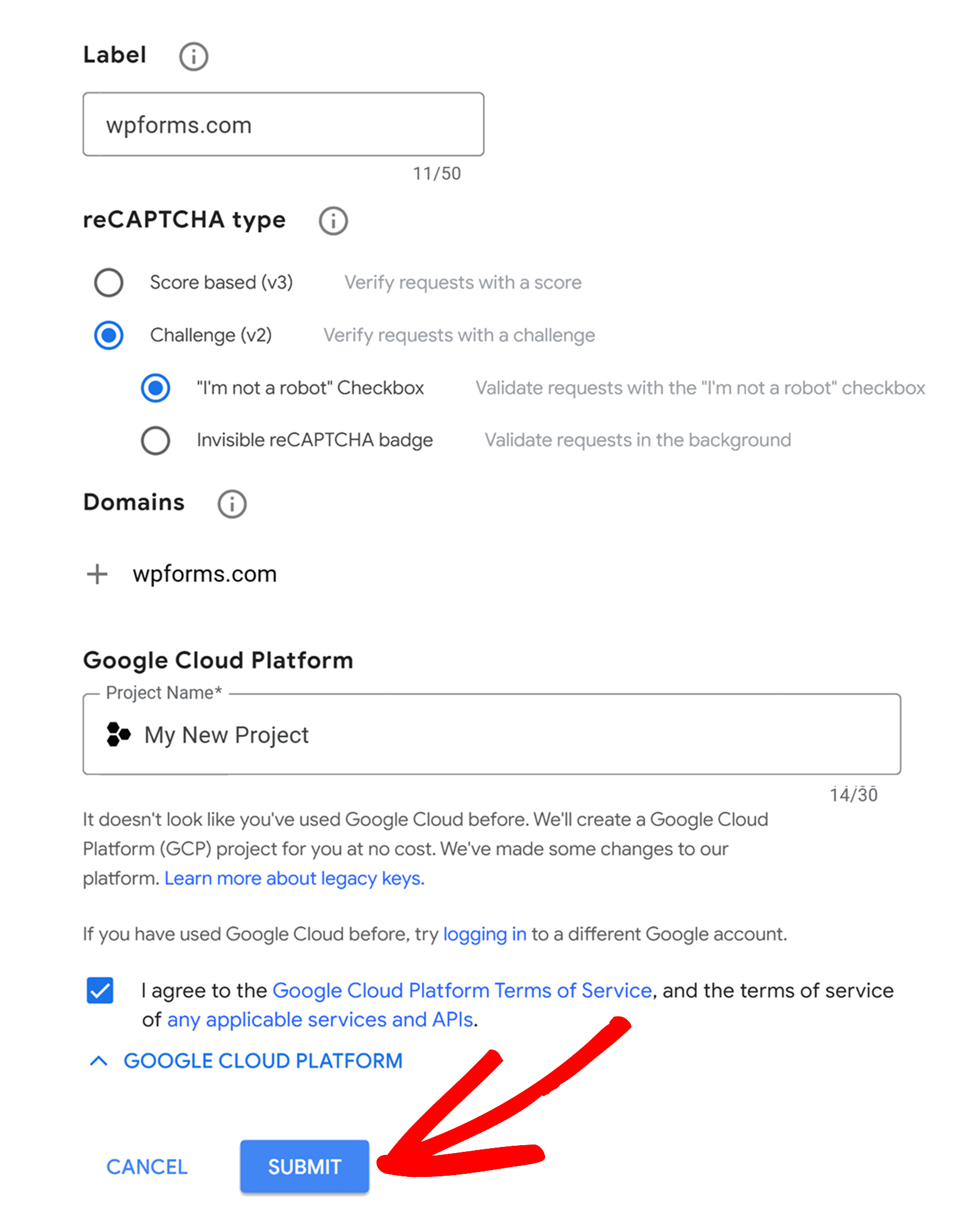
- Open the reCAPTCHA admin console and sign in with your Google account.
- Give the key a Label you will recognize later, then pick the reCAPTCHA type for your version.
- Under Domains, add
app.forminal.ai. Your forms run there, even when they are embedded on your site. If you also serve forms on a custom domain, add that hostname too, such as forms.example.com. - If Google asks for a Google Cloud project, keep the name it suggests or type your own, accept the terms and select Submit.
- Google then shows the site key and the secret key. Keep the page open for the next step.
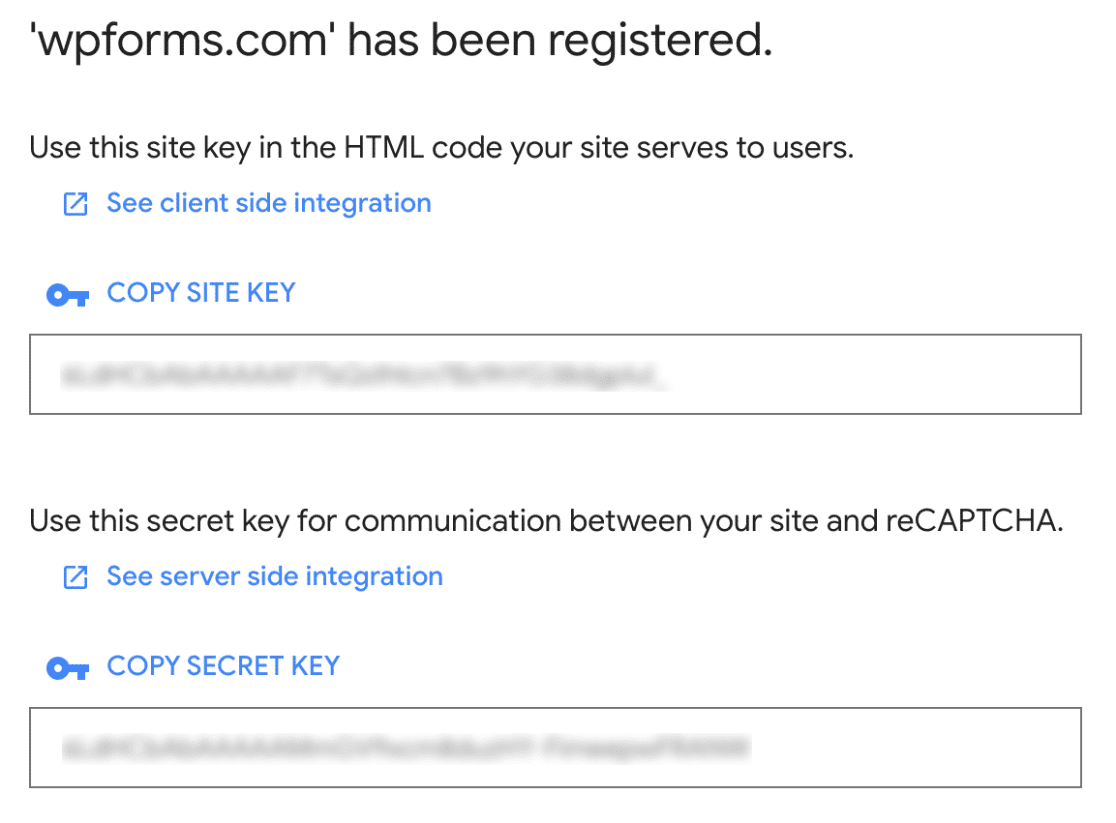
If Google shows the key in Google Cloud instead, open the key, select Use legacy key and copy the secret key from there.
Save the keys
- Open Account menu » Integrations.
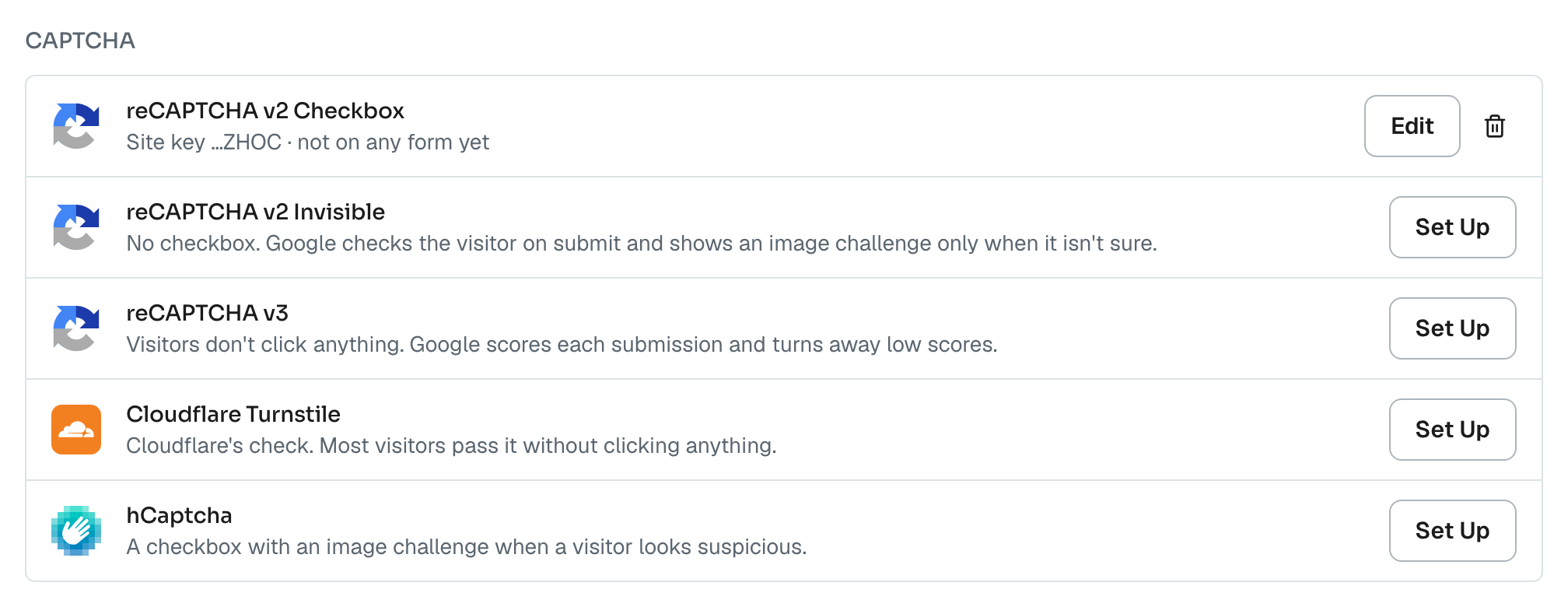
- Under CAPTCHA, select Set Up next to the version you made the key for: reCAPTCHA v2 Checkbox, reCAPTCHA v2 Invisible or reCAPTCHA v3.
- Paste the site key into Site key and the secret key into Secret key.
- For reCAPTCHA v3, set Lowest passing score. It starts at 0.5. Google scores bots near 0 and people near 1, so a higher number turns away more submissions.
- Select Save.
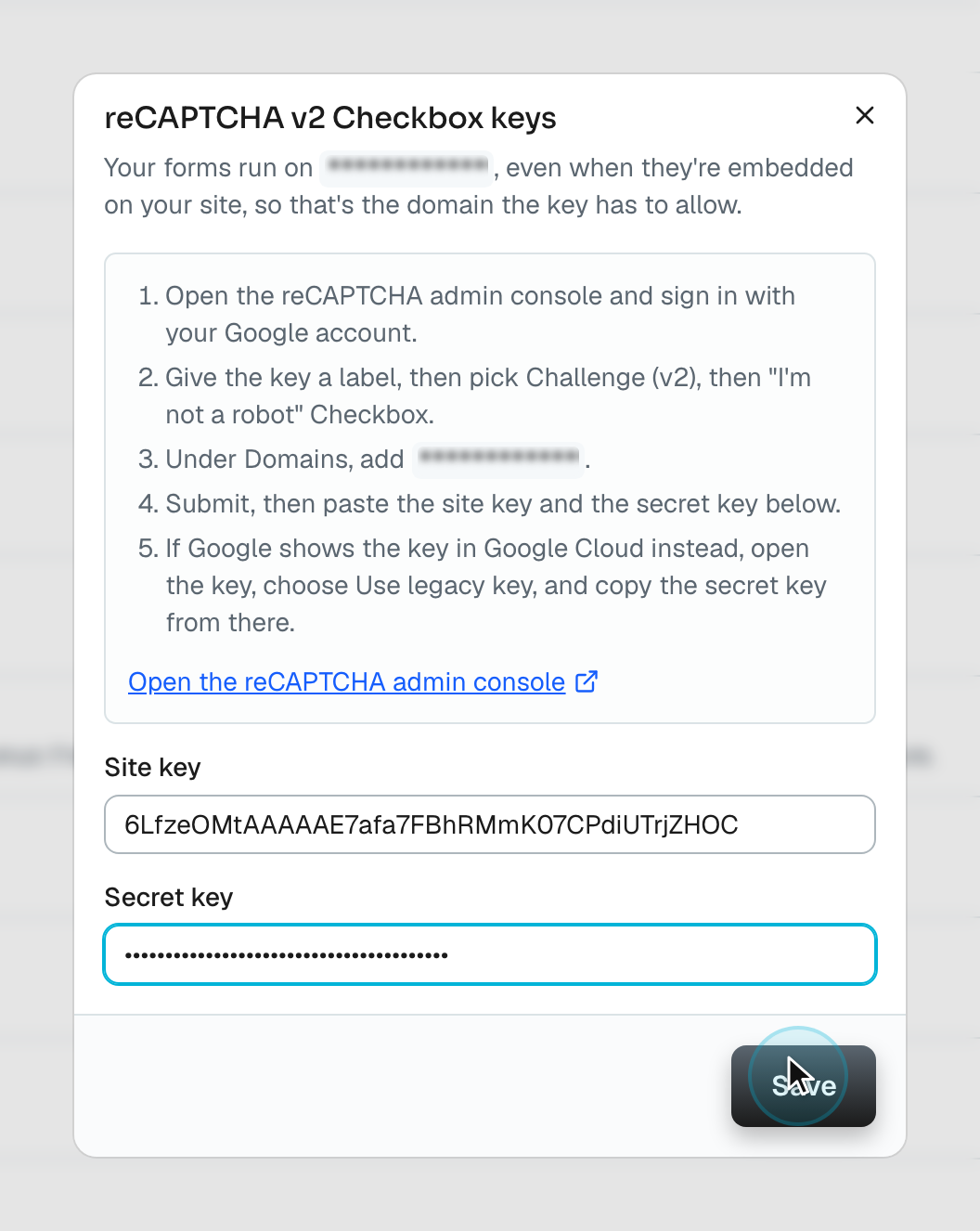
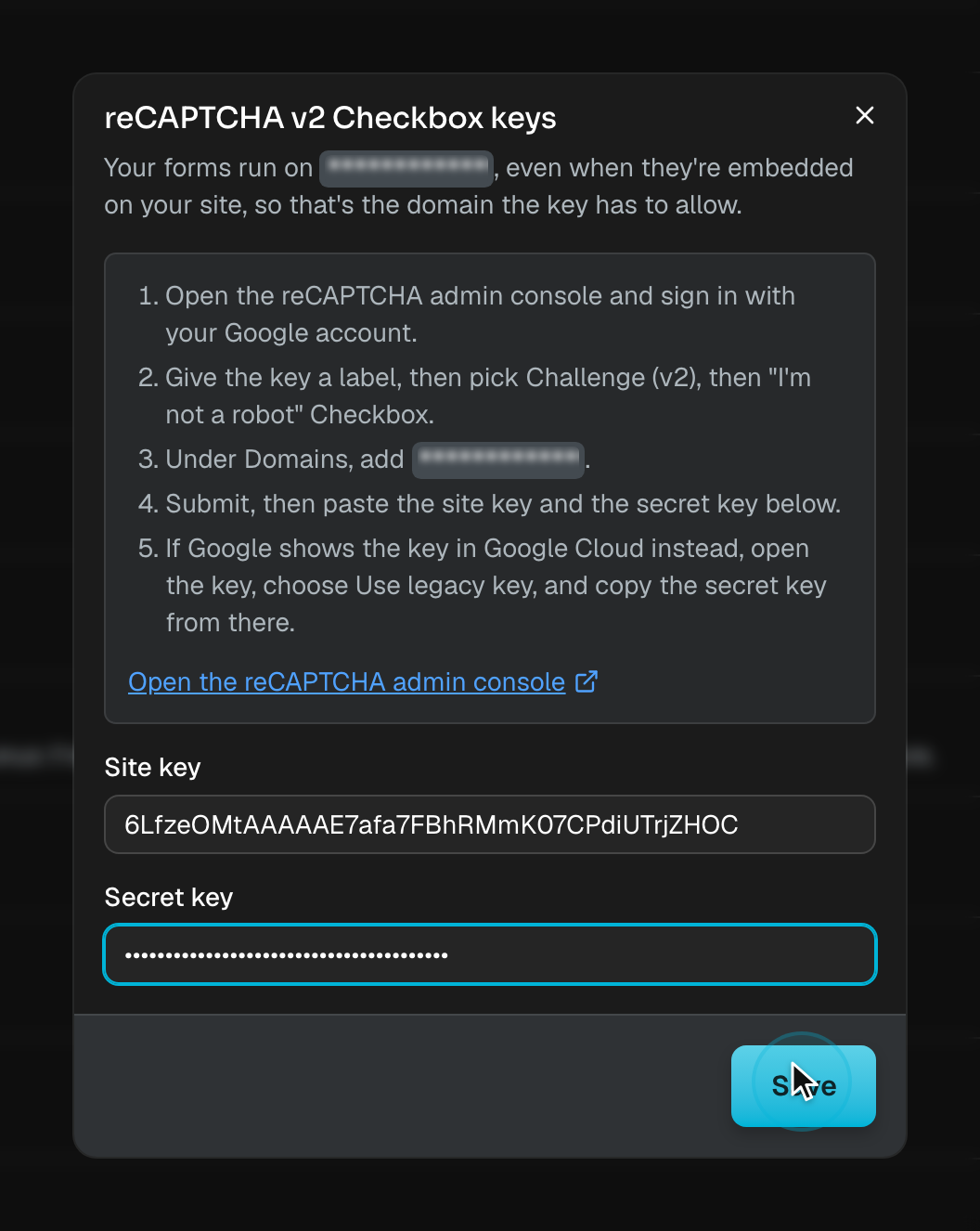
The row now shows the last four characters of your site key and “not on any form yet”. Keys belong to your account, so you save them once and use them on as many forms as you like. To change them later, select Edit. Leave Secret key empty to keep the saved one.
Turn it on for a form
- Open the form in the builder and select Integrations in the top bar.
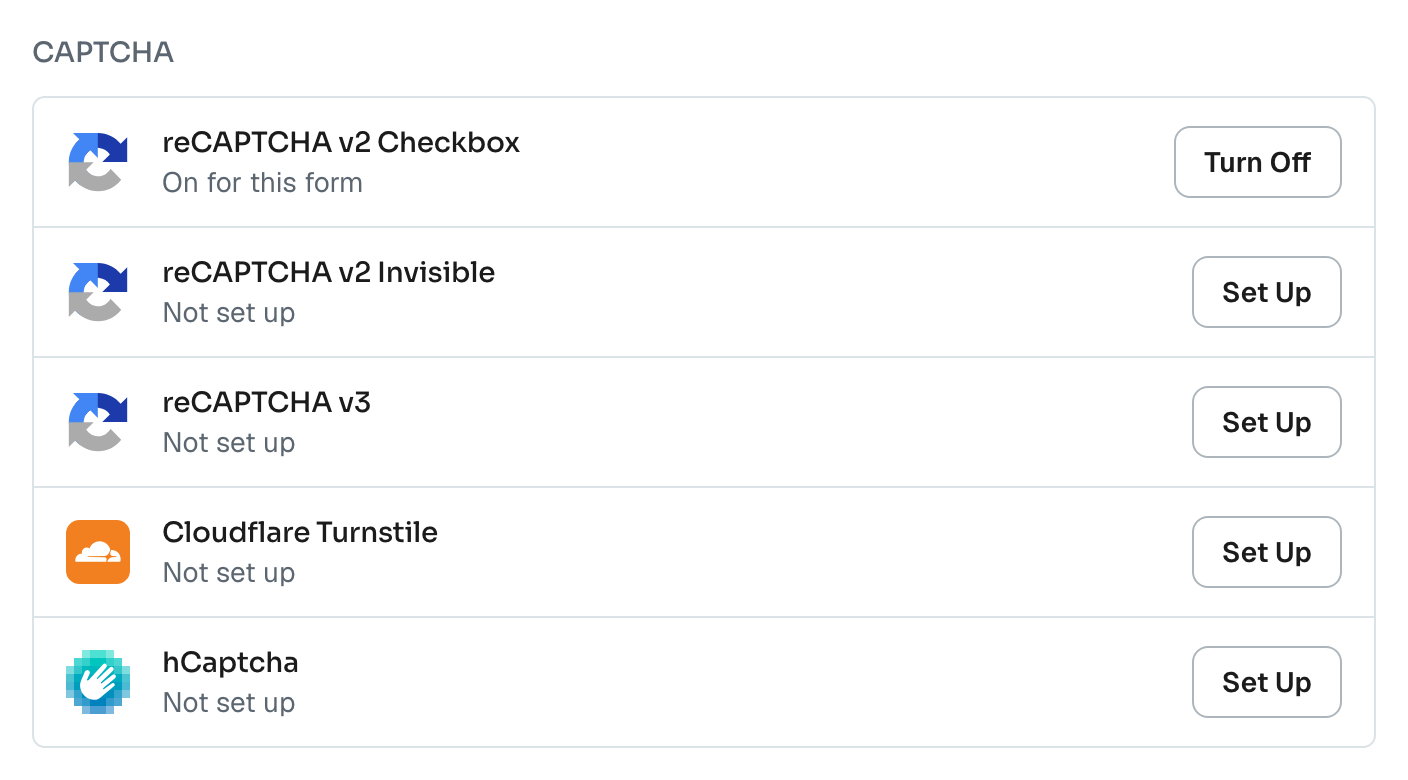
- Under CAPTCHA, select Use next to the version you saved keys for.
The row now reads “On for this form”, and its button changes to Turn Off. The change applies at once, also on a form that is already published. A form runs one CAPTCHA at a time, so selecting Use on another row switches the form to that one.
Check it works
- Open the form’s link in a private window, so you see it the way a visitor does.
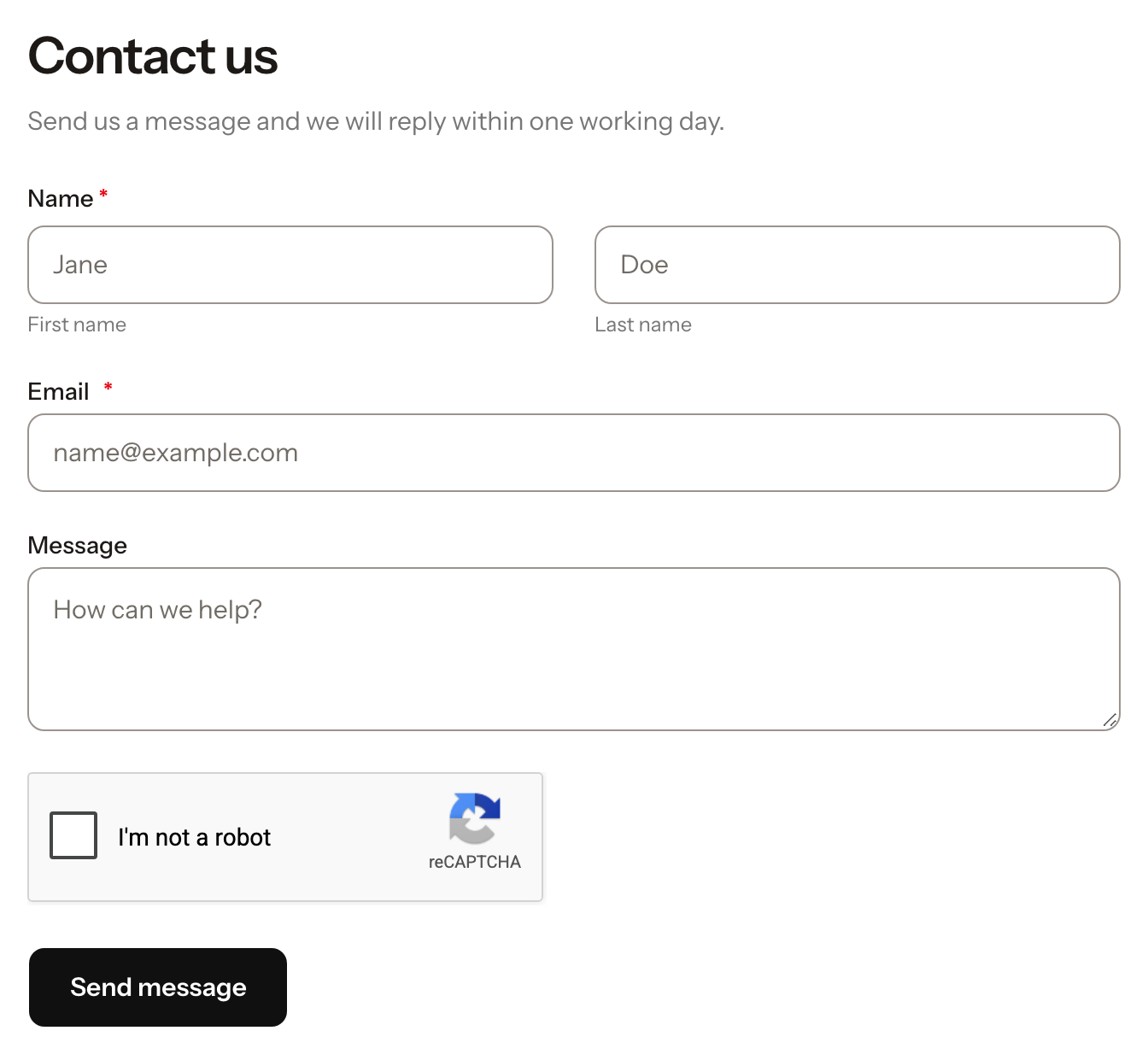
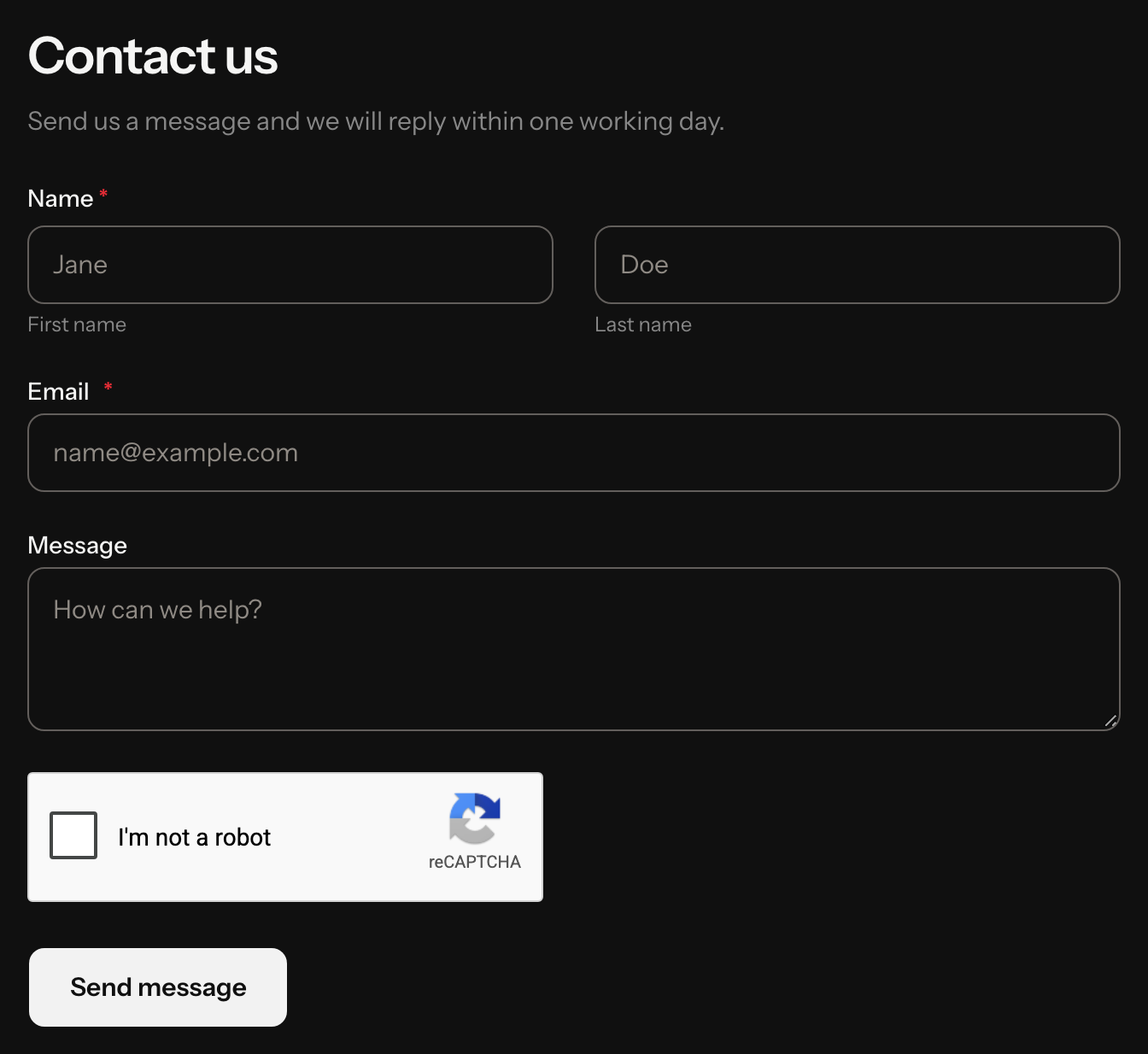
- With v2 Checkbox, the “I’m not a robot” box sits above the submit button. With v2 Invisible and v3 there is no box. A line under the questions reads “This site is protected by reCAPTCHA and the Google Privacy Policy and Terms of Service apply.”
- Fill in the form and submit it. The submission appears on the form’s Submissions page.
Troubleshooting
Google shows an error in place of the checkbox
Google checks the domain itself, in the widget, before the visitor can submit. “Invalid domain for site key” means the key doesn’t list the host the form ran on. Add app.forminal.ai under Domains in the reCAPTCHA admin console, and your custom domain if the form ran there. “Invalid key type” means the key was made for another version, such as a v3 key saved under reCAPTCHA v2 Checkbox. Save it under the row for its version, or make a new key for the version you want. With v2 Invisible and v3 there is no widget to show the error, so the visitor sees “Complete the CAPTCHA to send your submission.” when they submit.
Keys from Cloudflare or hCaptcha
Each provider’s keys work only on its own row. With a Turnstile or hCaptcha key saved under a reCAPTCHA row, Google’s widget shows an error, and the visitor sees “Complete the CAPTCHA to send your submission.” when they submit. Save the key under the row for its provider.
Real people are turned away with reCAPTCHA v3
The visitor sees “Complete the CAPTCHA and try again.” because Google scored them below your Lowest passing score. Open Account menu » Integrations, select Edit on the reCAPTCHA v3 row and lower the score, for example to 0.3.
Forms on a custom domain
Add the exact hostname the form runs on, such as forms.example.com, under Domains on the key. Forms keep running on the app host too, so leave that one on the list.
“Complete the CAPTCHA to send your submission.”
The form shows this when the visitor submits without a finished check, so it had nothing to send to Google. If the widget shows an error of its own above the button, the key is the cause: see the sections above. Otherwise the visitor hasn’t finished the check yet, and can finish it and submit again.
“Complete the CAPTCHA and try again.”
The form shows this when Google answered the check but Forminal turned it down. With reCAPTCHA v3 the usual cause is a score under your Lowest passing score. With any version it also happens when the check was solved on another site, such as a page that copied your site key, or on a custom domain that is no longer active on your account. Nothing is saved, and the visitor can try again.
“The CAPTCHA could not load. Turn off any blocker for this page and reload it.”
The visitor’s browser didn’t load Google’s script, most often because an ad or privacy blocker stopped it. The form can’t be sent until the script loads.
“Could not check the CAPTCHA. Try again in a moment.”
Google couldn’t be reached to check the answer. Nothing is saved, and trying again a moment later usually works.
The row says “Keys removed, so this form has no CAPTCHA”
The keys were removed from your account, so the form takes submissions without a CAPTCHA. Save keys for that provider again and the form uses them straight away.
Frequently asked questions
Which reCAPTCHA version should I choose?
v2 Checkbox shows a box visitors tick, v2 Invisible checks them when they submit, and v3 never shows a challenge but turns away low scores. Spam Protection compares them with Turnstile and hCaptcha.
Can I move from v2 to v3 with the same key?
No. Google makes each key for one version, so create a new key for v3 and save it under the reCAPTCHA v3 row.
What Lowest passing score should I use for v3?
Start with 0.5. If real people see Complete the CAPTCHA and try again, lower it, for example to 0.3.
Do I need to add my own website to the key?
No, add the host your forms run on, which the keys dialog shows. Add your custom domain’s hostname only if you serve forms there.
Does reCAPTCHA stop scripts that post to the form directly?
Yes. While a CAPTCHA is on, only a browser that passed the check can submit, so scripts that post straight to the submit address are turned away.